Why a Public Bench Can Change the Shape of a Meeting
See how public bench placement and design can make a shared route easier to pause in, rest at and use alongside neighbours with different needs.
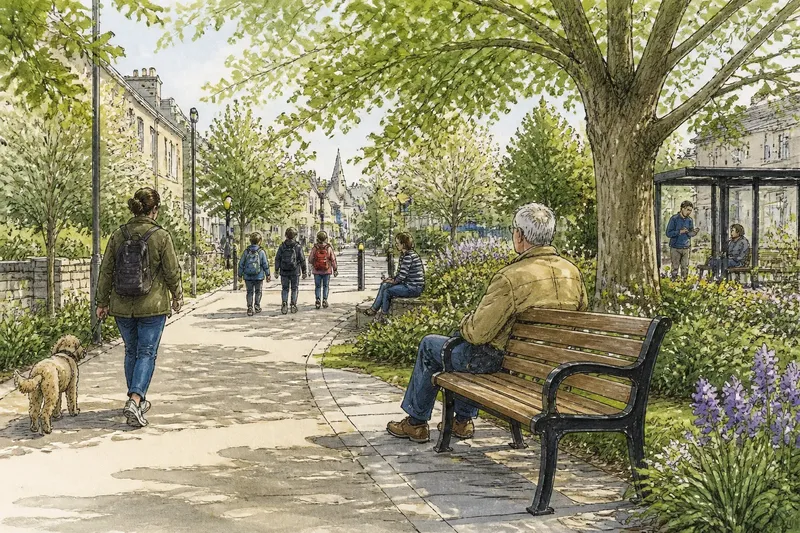
The common mistake with a public bench is to treat it as a finishing touch, placed beside a path after the important design decisions are done. The cost is a route with nowhere comfortable to pause and a public space that works best for people able to keep moving. A public bench can change the shape of a meeting by giving an ordinary pause a place to happen.
That change is modest but meaningful. A bench does not make strangers friends, and not everyone wants company. It can make waiting, resting and noticing one another part of a shared place. The question is not simply whether a seat exists, but what kinds of presence its location and design allow.
A bench gives a route a place to pause
A path is usually understood through movement: it takes someone from one point to another. A seat adds another use. Someone can stop without blocking the way, take a breath, wait for a companion or watch activity nearby. The route now includes a place to remain as well as a direction to go.
Many encounters in civic spaces begin without an invitation or a plan. Someone might recognise a neighbour while resting, hear a conversation without joining it or share a view with others. The bench makes these possibilities ordinary. It asks less of people than a formal gathering does.
Think of a bench as a bookmark in a well-used book. It marks a place where someone may return or pause, but it does not dictate what they should do there. A seat beside a broad path can support quiet observation; one near a busy entrance may become a waiting point. Its surroundings shape its meaning.
Placement decides who can linger
Where a bench stands often matters more than its appearance. A seat facing an active square lets someone watch what is happening. One turned towards a wall may feel disconnected. A spot beside a path can make stopping feel natural, while a seat tucked behind planting may offer privacy but be harder to notice.
Look at the whole approach, not just the ground beneath the bench. Can someone reach it without stepping over a kerb or crossing a muddy verge? Can people pass without brushing against seated users? Does the location offer shade or shelter? These details affect whether resting feels like a normal use of the place or an awkward interruption.
Distance from activity calls for judgement. Near a bus stop, a bench can support waiting. Beside a play area, it may give carers a place to sit nearby. In a quiet corner, it can offer solitude. Several seats with different orientations may serve more people than one conspicuous gathering point.
Seat design signals how people may use it
Backrests and armrests can support people who need help sitting down or standing up. They also divide a long surface into smaller places, which may feel more comfortable to someone who does not want to sit close to a stranger. A backless seat may suit a brief pause but offer less support.
Materials and maintenance also shape the invitation. Timber may feel familiar, while metal can be uncomfortable in strong sun or cold weather. A seat that collects water or is regularly obscured by litter suggests that comfort has not been considered. Choose according to local conditions and the care available, not style alone.
Leave room for people who do not sit on the bench. A companion may stand nearby; someone using a wheelchair may want to join a seated friend at the same level. Clear, level ground space beside the seat makes this possible without separating the wheelchair user from the conversation.
Shared seating does not mean shared habits
People use public seats in different ways. One person may want conversation; another may prefer to read quietly. Someone might stop only long enough to adjust a bag, while another needs a longer rest. A thoughtful public place allows these uses without insisting that every pause become social.
Imagine a neighbourhood choosing a bench beside a route used by schoolchildren, older residents and people walking dogs. The starting point is a narrow path with no resting place. The group checks the approach, leaves clear space to pass and places a supportive seat near the route without putting it in the middle of the flow. After it is installed, a parent can wait there while a passer-by rests nearby; they exchange a greeting and then continue with their own plans. A resident who comes alone can use the same seat for a quiet break. The expected observable result is that people can pause without blocking the path, whether or not they speak.
That distinction protects the value of the seat. A bench can support contact without requiring disclosure, conversation or a particular kind of sociability. It can also be useful when nobody else is there. If socialising is treated as the only measure of success, the quieter benefit of resting in public without having to buy anything may be missed.
Public bench design questions deserve clear answers
Where should a public bench go?
Choose a spot people can reach easily, with room to pass and a reason to pause nearby, such as a crossing, garden edge or waiting area. Consider views, shade and whether people may want company or a quieter seat.
Should a public bench face the path?
Facing activity can help someone feel part of the place and notice companions. Turning a seat away from the main flow may offer more privacy; a mix of orientations can serve both preferences.
What makes a public bench accessible?
Useful features can include a supportive back, armrests and clear, level space alongside the seat. Check the approach and surrounding path as well as the bench itself, since an accessible seat is of little use if the route is obstructed.
How can a bench serve people who do not want to talk?
Offer a position where someone can sit without being placed at the centre of activity or forced into face-to-face contact. A public bench should allow quiet presence as readily as conversation.
Maintenance is part of the welcome
A seat is a promise made by the space, and its condition affects whether people trust that promise. Loose boards, sharp edges, litter or overgrown access can make a bench feel abandoned. A clear plan for inspection and repair matters as much as choosing an attractive model.
Notice how the surrounding place is used before deciding what needs attention. If nearby bins overflow, collection may be the issue rather than the seat. If a bench is repeatedly blocked, the path layout may need reconsideration. Maintenance works best when someone records the problem, identifies who can address it and checks that the route remains usable.
Local instructions, manufacturer guidance and access requirements may affect the choice and upkeep of public seating. Check the relevant guidance before making a decision. Residents reporting a problem can help by naming the location, describing what prevents use and saying whether the obstruction is occasional or persistent.
Judge the bench by the choices it leaves open
Ask whether someone can approach the bench, rest there comfortably and leave without disrupting others. Ask whether a person can sit alone, share the space without speaking or meet someone for a short conversation. These are practical ways to judge whether the seat belongs to the public life around it.
A public bench will not settle who feels at home in a neighbourhood. Its position, support and upkeep can make one part of public life easier to enter. When assessing public bench design, keep the purpose clear: let different people pause on their own terms while leaving the path open for everyone else.