The Unchanging Tradition Is a Story We Tell
Trace a local custom’s continuity, record how it has changed and preserve differing memories without presenting one version as the only authentic one.
The common mistake with a local custom is to treat its oldest remembered form as the only authentic one. That can erase the people and choices that kept it alive through change. An unchanging tradition is often a story told about a practice, not a faithful account of every time it was performed.
To understand a local custom, start with what people actually do. Then trace what has shifted, who made those choices and what the practice still carries. The aim is not to declare a version pure or false, but to make continuity visible without hiding disagreement.
Start with the practice people recognise
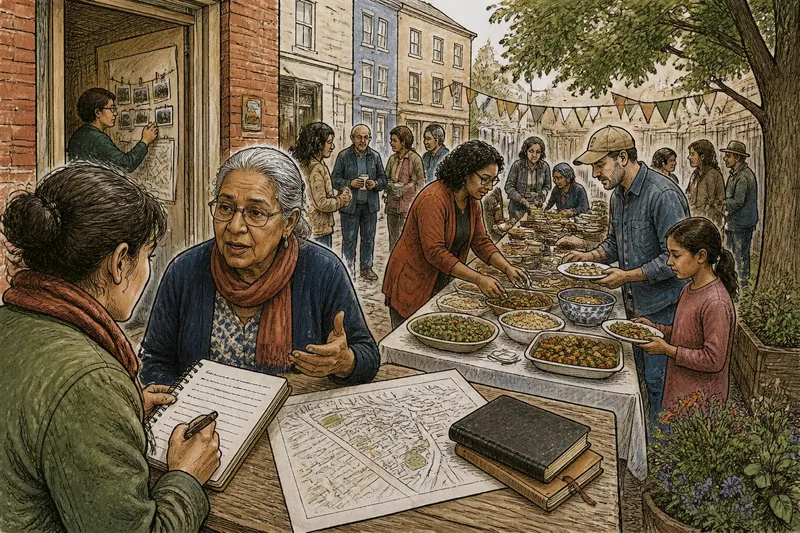
Choose one recurring custom in a specific place: perhaps a neighbourhood procession, a shared meal after a local gathering, or the way residents mark the opening of a community event. Keep the subject narrow. “How we celebrate here” is too broad; “who prepares and serves the meal after the annual gathering” gives you something observable.
Describe the practice in plain terms before interpreting it. Note where it happens, who takes part, what people bring or say, and what signals that it has begun and ended. When speaking with others, ask them to describe their own experience rather than offering an account for them to confirm.
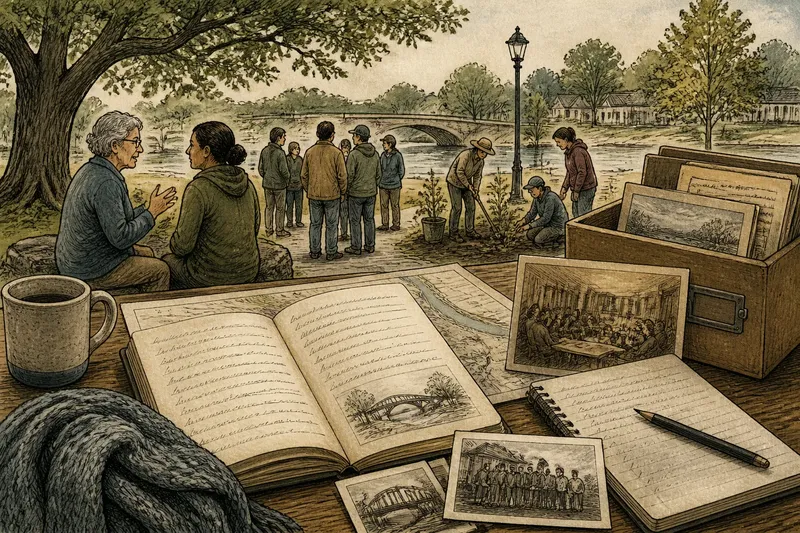
Use a notebook, a simple map of the location or a shared document. Separate what you saw or heard from what someone remembers and from what you infer. That distinction is like keeping ingredients apart on a kitchen board: it makes the later account easier to check.
Gather more than one memory
Ask people with different relationships to the custom. Someone who organises it may know why a route or role changed; a newer participant may notice an assumption long-timers no longer see. Include people who stopped attending, if they are willing to explain why. Their absence can be part of the custom’s history, not a gap to smooth over.
Keep questions open and specific. Try: “What do you remember happening when you first took part?” or “What has changed since then?” Ask what stayed important, too. Avoid asking only for the “original” version, which can make one person’s memory sound like the official record.
Do not press anyone to speak for an entire group. Record uncertainty and disagreement accurately. If someone does not want a memory shared beyond the conversation, respect that boundary and leave it out of public material.
Trace the changes in order
Put remembered and documented changes into a sequence, but mark how certain each detail is. A programme, meeting note, photograph or recipe may help establish that a version existed. It rarely explains by itself why people changed it. Ask what prompted the shift and who took part in the decision.
Use these kinds of adaptation to organise what you learn:
- Practical changes: Check whether the gathering moved indoors because its usual location became unavailable; if so, record the reason and the replacement place, and if the reason is unclear, ask participants rather than guessing.
- Changes in participation: Check whether a task once assigned to a narrow group became open to more volunteers; if so, record who made the change and who can take part now, and if access is still limited, note the barrier and ask who can address it.
- Changes in meaning: Check whether a familiar phrase was explained or replaced because its implication became contested; if so, record both the earlier and current wording with participants’ reasons, and if accounts differ, attribute them instead of choosing one.
- Changes in form: Check whether a performance was shortened while a central gesture remained; if so, record what was removed and what participants say the gesture means, and if people disagree about what is central, preserve those views separately.
- Changes in place: Check whether the custom shifted to a different street, hall or meeting room; if so, note who proposed the move and what changed for participants, and if the effects are disputed, include the different accounts.
- Changes in materials: Check whether people now use different objects, foods or written prompts; if so, ask what prompted the substitution and whether the earlier materials still matter, and if the reason is unknown, mark it as uncertain.
These categories are prompts, not verdicts. A change may belong to more than one, and people may disagree about whether a feature is central. Keep that disagreement in the account rather than ranking people by how long they have participated.
Ask what continuity means to different people
Once you have a sequence, ask what participants believe must remain for the custom to feel like itself. One person may name a shared task; another may value the place, the season or the chance to remember absent neighbours. These answers need not match.
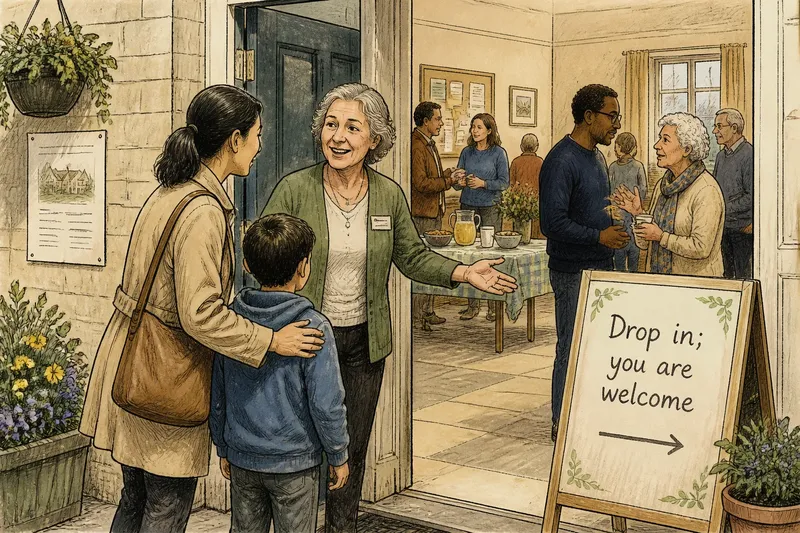
Say you are documenting a neighbourhood meal that used to follow a formal speech. Imagine that the starting point is a long speech before people share dishes they have brought. Organisers then replace it with a short welcome, while the shared meal continues. Long-time organisers say the meal is the custom’s heart; other participants say the speech mattered because it named the people who built the gathering. The resulting account records both attachments and asks what the welcome now does, rather than claiming that one version is authentic.
Separate a custom’s visible form from the relationships and purposes participants connect to it. That does not mean any change is harmless. It gives people a clearer basis for discussing whether a new version still serves those purposes, whom it includes and whom it leaves out.
Make room for disagreement without forcing a verdict
When you share what you have learned, use precise language: “Some organisers recall…” or “Participants differ over…” is more honest than presenting a single memory as settled fact. Name who made a change when that is known. If the record is unclear, say so.
For a group deciding what to do next, discuss the choice itself rather than asking whether the custom is authentic. Ask what people want to preserve, what they would change, and who should be involved in that decision. A brief written record of the options and differing reasons can prevent a later account from turning a contested choice into an invented consensus.
Where a custom involves a cultural protocol, a community’s restricted knowledge or a formal local rule, ask the people responsible for it what may be recorded or changed. If they set limits on sharing or participation, respect those limits; if the rule is unclear, pause and seek clarification from the relevant custodians or local authority before proceeding.
How can a changing custom still feel continuous?
Does a tradition have to stay exactly the same?
No. A practice can change in form while participants keep recognising its purpose, relationships or shared responsibilities. Ask what people themselves connect to its continuity instead of assuming that age alone settles the question.
Who gets to decide whether a custom is authentic?
There is rarely one voice that can settle the matter for everyone. Listen to people with different roles and histories, and make clear whose account you are presenting rather than claiming to speak for a whole community.
How should I record memories that conflict?
Keep each account attributed and distinguish recollection from documents or direct observation. Do not merge conflicting details into a smooth story; explain what is disputed and what remains unknown.
What should happen when people want different changes?
Write down the proposed options, the reasons behind them and who would be affected. A group can then decide whether to try a change, retain the current practice or continue the discussion, without pretending that everyone agrees.
Leave a record that can keep changing
Finish with a short account that identifies the custom, where and when it takes place, the changes you can describe, and the different meanings people attach to it. Note what remains uncertain. Invite participants to correct errors, while keeping a record of meaningful disagreement rather than editing it away.
Store the account somewhere the relevant community can access, and make its date and authorship clear. If people revise it later, preserve the earlier version or note what changed. A careful record of a local custom lets future readers see not a frozen tradition, but the choices through which people carried it forward—and who was asked to guide what could be shared.